
Give the floor
another chapter.
Keep what is sound. Understand what needs repair.
Keep the character.
Change the finish.
Not every worn floor needs replacing. Start with a survey of its construction, wear depth, fixings and moisture conditions.
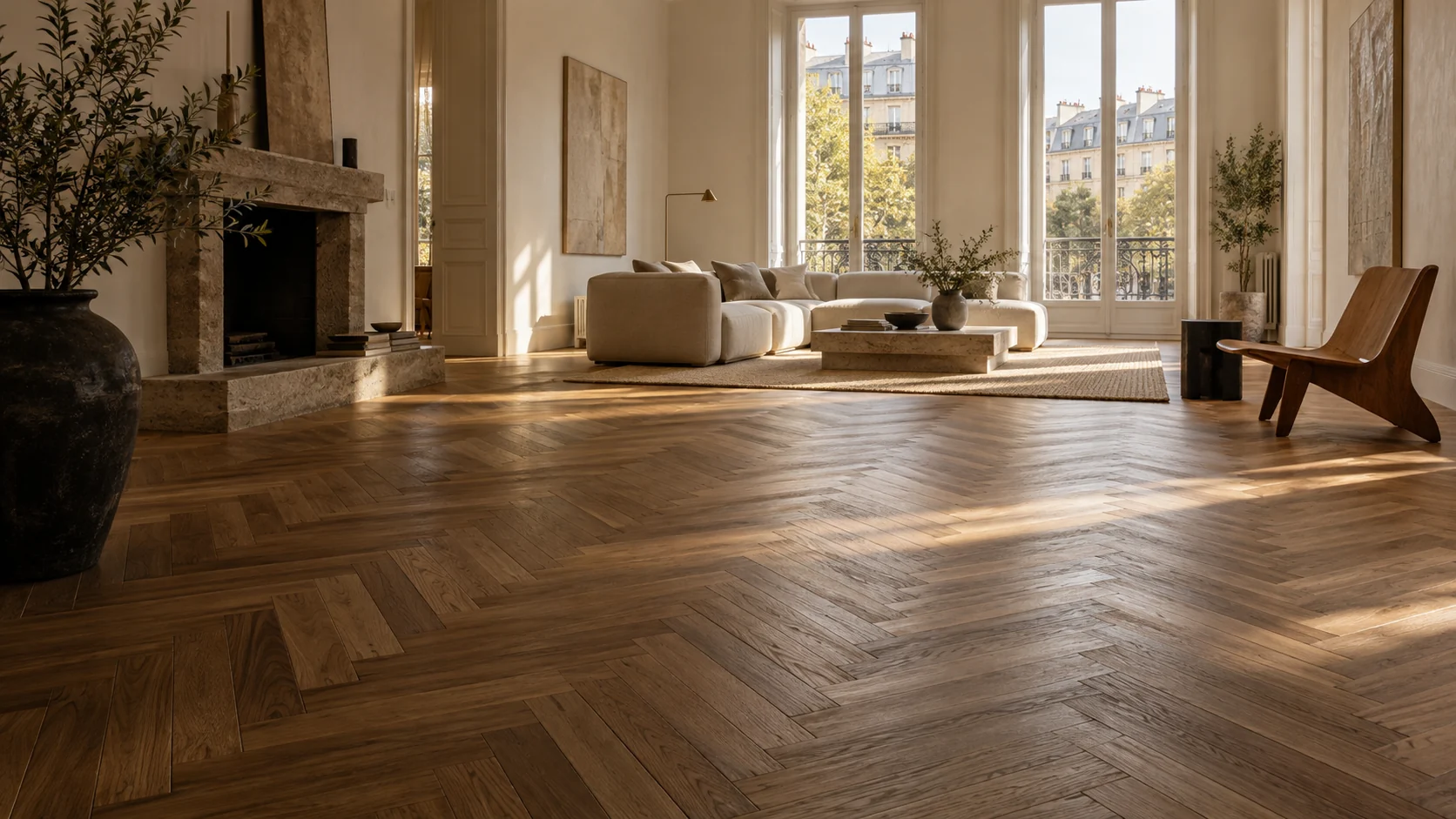
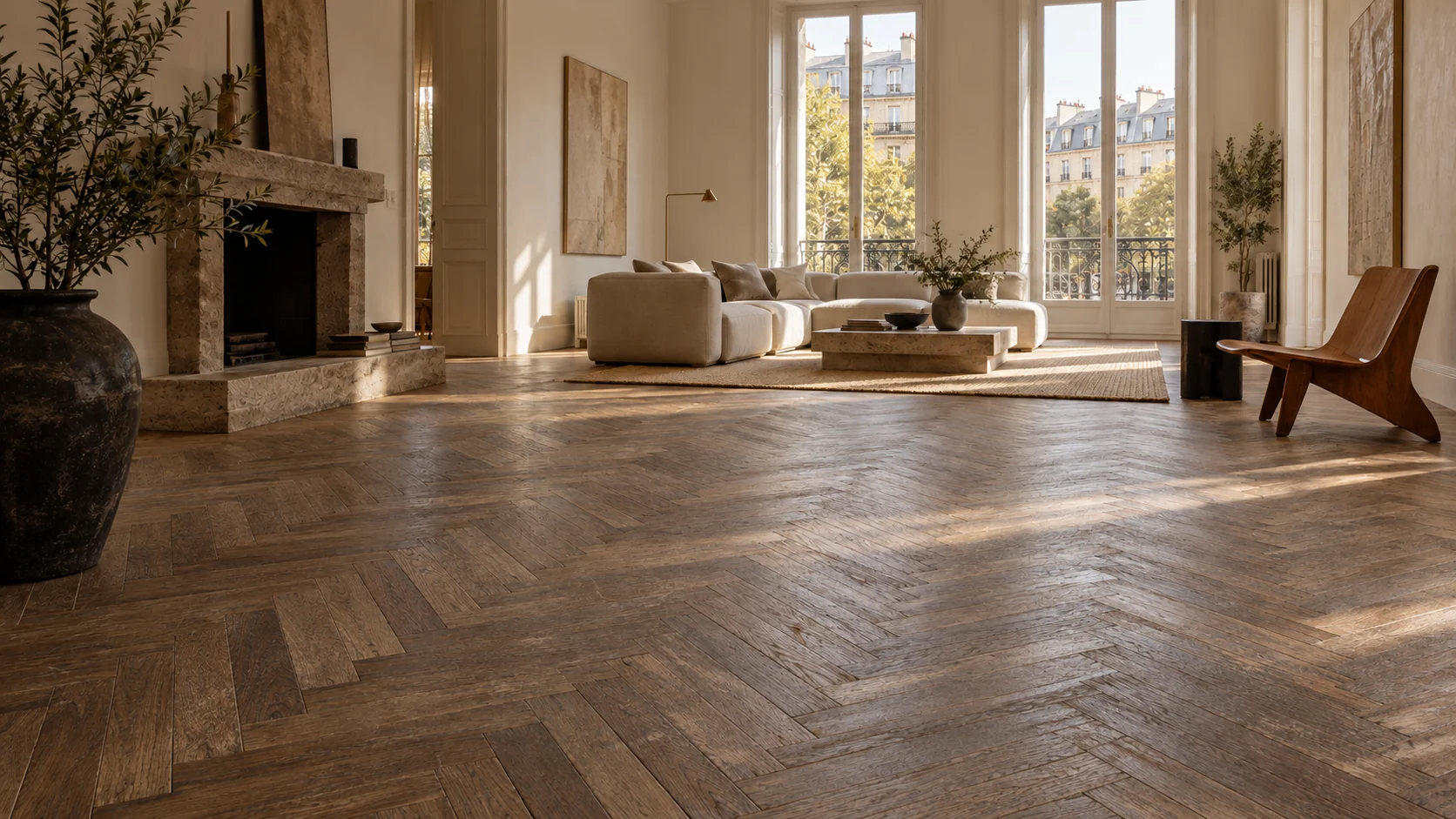
BeforeAfter
Assess before sanding.
- What can stay?
- Identify the floor construction and remaining wear layer. Check loose blocks, movement, previous repairs and the condition around thresholds.
- Repair before refinishing
- Resolve local failure and agree matching material where available. Sanding alone cannot correct an unstable or damp supporting floor.
- Agree the finish
- Review a trial area or sample, sheen and maintenance needs. Existing stains, patches and colour variation may remain visible.
- Return to use
- Follow the finish manufacturer’s drying and curing requirements. Discuss when furniture, rugs and routine cleaning can return.
Know the limits.
Can every timber floor be sanded?
No. Wear depth, construction, damage and previous sanding determine whether further material can safely be removed.
Will repaired areas match perfectly?
Aged timber and new repair pieces can differ. Compare proposed materials and discuss the likely variation before work begins.
Will the work be completely dust-free?
Discuss the actual extraction and protection arrangements. Do not assume a sanding process creates no dust or disruption.